
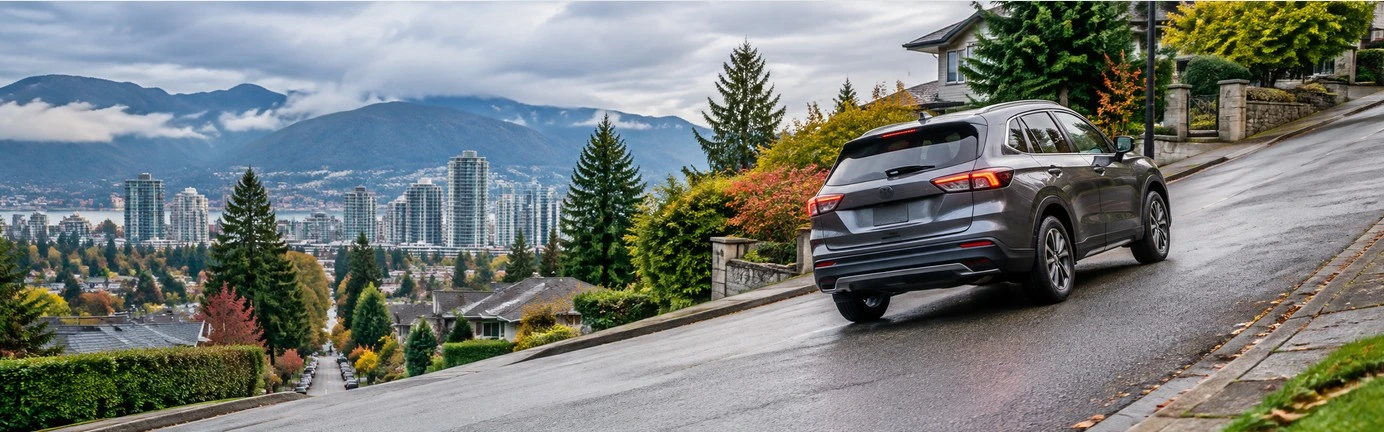
If your car loses power, hesitates or feels sluggish going uphill, the problem may involve fuel delivery, airflow, ignition, exhaust flow, the transmission or another system that becomes more noticeable when the vehicle is under load. Climbing a hill requires more from the engine and drivetrain than driving on a flat road, so a developing problem may first become noticeable on Burnaby’s steeper streets.
Drivers often describe the problem in everyday terms: the car feels like it “isn’t getting enough gas on inclines,” has a “lack of power going up the hill,” or simply doesn’t respond normally when the accelerator is pressed. Those descriptions can provide useful diagnostic clues.
If the power loss is sudden or severe, the check engine light is flashing, or the vehicle cannot maintain a safe speed, stop driving when it is safe to do so and have the vehicle assessed.
Why Does a Car Struggle More Going Uphill?
Driving uphill puts the engine and drivetrain under greater load. The vehicle needs additional power to maintain speed and accelerate against the incline. A system that performs adequately during easy, level driving may begin showing symptoms when that additional demand is placed on it.
You might notice the vehicle hesitating when you press the accelerator, struggling to maintain speed, feeling unusually sluggish, running roughly or increasing RPM without accelerating as expected.
For Burnaby drivers, these symptoms may become particularly noticeable while travelling through hilly areas such as South Slope or around Metrotown. The hill itself doesn’t necessarily cause the problem—it can simply make an existing issue easier to notice.
What Burnaby Drivers Tell Us
Customers don’t always describe the problem as “power loss under load.” Tammy, Crompton Brothers Automotive’s front office manager, often hears drivers explain that their vehicle has a “lack of power going up the hill” or feels like it “isn’t getting enough gas on inclines.”
Those everyday descriptions are useful. Knowing when the problem occurs, what the vehicle feels like and whether anything else happens at the same time can help the Crompton Brothers team determine where to begin investigating.
Common Reasons a Car Loses Power Going Uphill
Several different problems can cause a vehicle to hesitate or lose power while climbing a hill. Because the symptoms can feel very similar from the driver’s seat, testing is important before deciding which component needs attention.
Can Fuel Delivery Problems Make a Car Struggle Uphill?
Yes. When you accelerate or climb a hill, the engine needs enough fuel to meet the increased demand. If the fuel-delivery system cannot keep up, the vehicle may hesitate, feel sluggish or struggle to maintain speed.
Depending on the symptoms, a technician may investigate fuel pressure, fuel injectors or other components involved in delivering fuel to the engine.
Can Airflow Problems Cause Loss of Power?
The engine also needs the correct amount of air to operate properly. Problems affecting airflow, intake components or the sensors the engine computer relies on can affect performance.
A vehicle may appear to drive normally under light conditions but begin struggling when accelerating or climbing a hill places greater demand on the engine.
Can Bad Spark Plugs or an Engine Misfire Cause Power Loss Uphill?
Yes. Worn spark plugs, ignition-coil problems and other ignition faults can cause an engine to misfire.
A minor ignition problem may be difficult to notice during light driving but become more apparent when the engine is working harder. The driver may experience hesitation, shaking, rough running or reduced acceleration, and the check engine light may come on.
Can a Restricted Exhaust Cause a Car to Lose Power?
Restricted exhaust flow can interfere with engine performance and may become particularly noticeable under load. Certain catalytic-converter problems are one possible cause of restricted exhaust flow.
However, loss of power going uphill does not automatically mean the catalytic converter has failed. Other problems can create similar symptoms, so testing is needed before reaching that conclusion.
Why Does My RPM Go Up but My Car Doesn’t Accelerate?
Sometimes what feels like an engine losing power isn’t actually an engine problem.
If the engine RPM rises but the vehicle doesn’t accelerate normally, technicians may need to investigate the transmission or other drivetrain components.
Paying attention to the difference between the engine struggling to produce power and the engine revving without the vehicle accelerating normally can provide an important diagnostic clue.
Why Burnaby Drivers May Notice the Problem on Hills First
Burnaby’s terrain can make a developing performance problem easier to notice. Areas around South Slope, Metrotown and other parts of Burnaby have inclines that require the engine and drivetrain to work harder than they do while cruising on level roads.
A vehicle may feel completely normal during a short trip on flatter streets, but when the driver begins climbing a hill, it may hesitate, feel sluggish, struggle to maintain speed or require more accelerator input than usual.
The important distinction is that Burnaby’s hills don’t necessarily cause the mechanical problem. Instead, the additional load created by climbing can expose a developing issue that may not yet be noticeable during easier driving conditions.
What Should I Pay Attention to When My Car Loses Power?
The details you notice while driving can provide valuable clues. Before bringing your vehicle in for diagnosis, pay attention to when the power loss occurs and what the vehicle does at the same time.
For example, consider whether:
- The loss of power happens only when climbing hills or also during acceleration on level roads.
- The vehicle hesitates when you first press the accelerator.
- The engine feels rough, shakes or seems to misfire.
- The RPM increases without a corresponding increase in vehicle speed.
- The check engine light comes on or begins flashing.
- You hear an unusual noise when the engine is working harder.
- You notice an unusual smell.
- The problem occurs when the engine is cold, warmed up or both.
- The vehicle struggles to maintain its normal speed on an incline.
You don’t need to know the mechanical terminology. Describing exactly what you felt, heard or saw—and when it happened can be more useful than trying to diagnose the problem yourself.
At Crompton Brothers Automotive, that communication starts before the vehicle reaches the technician. Tammy, Riaz and Derek review incoming vehicles and their histories so the team understands the customer’s concerns, previous work and recommendations.
What Your Car Is Doing Can Provide Important Clues
| What you notice | What a technician may investigate |
|---|---|
| Hesitates mainly under acceleration or uphill | Fuel, ignition, airflow or engine-management systems |
| Engine shakes or runs roughly | Misfire, ignition or other engine-performance problems |
| RPM rises but the vehicle doesn’t accelerate normally | Transmission or drivetrain |
| Check engine light appears with power loss | Diagnostic trouble codes and the systems related to those codes |
| Power loss occurs on hills and during hard acceleration | Problems that become more apparent under increased engine load |
These symptoms can overlap and are not a diagnosis by themselves. Inspection and testing are still needed to identify the underlying cause.
Is It Safe to Keep Driving When My Car Loses Power?
Whether it is safe to continue driving depends on how severe the power loss is and what other symptoms occur with it. A vehicle that suddenly struggles to accelerate or maintain speed can become a safety concern, particularly when climbing a hill, merging into traffic or crossing an intersection.
Pay particular attention if the loss of power is accompanied by:
- A flashing check engine light
- Severe shaking or rough running
- Overheating
- Unusual knocking, grinding or other new noises
- Smoke or a strong unusual smell
- Sudden or significant loss of acceleration
- Difficulty maintaining a safe road speed
If the vehicle suddenly loses substantial power or shows other serious warning signs, avoid continuing to drive it unnecessarily and have the problem assessed.
Even intermittent hesitation is worth investigating. A vehicle may drive normally most of the time and only struggle when the engine is under greater load. That doesn’t necessarily identify which component is causing the problem, but it provides an important diagnostic clue.
Why Guessing at the Problem Can Get Expensive
When a car loses power going uphill, it can be tempting to search the symptom online and start replacing the part that appears most often in the results.
The problem is that fuel, ignition, airflow, exhaust, electronic and drivetrain issues can produce very similar symptoms. Replacing parts without confirming the cause can quickly become expensive, and the original problem may still be there.
At Crompton Brothers Automotive, the approach is to diagnose the problem first, explain what the vehicle needs and let the customer decide how to proceed.
Owner Riaz describes the shop’s philosophy as servicing the vehicle rather than simply selling repairs. The team identifies what the vehicle needs, discusses the findings with the customer and, when appropriate, helps prioritize repairs around the customer’s needs and budget.
The same principle applies when diagnosing a vehicle that struggles on Burnaby hills. The first step is determining why the vehicle is losing power under load.
How Crompton Brothers Diagnoses Loss of Power
When a vehicle loses power going uphill, the diagnostic process starts with the driver’s description.
Details such as whether the vehicle hesitates only on hills, struggles during acceleration, runs roughly or increases RPM without gaining speed can help point the technician toward the systems that need further investigation.
From there, the Crompton Brothers team can review the vehicle’s history and determine which systems need to be inspected or tested. Depending on the symptoms, that could involve the fuel, ignition, air-intake, exhaust, engine-management or drivetrain systems.
Crompton Brothers also uses Digital Vehicle Inspections (DVI) to document vehicle condition and maintain inspection history. This provides the team with additional information about previous findings, recommendations and work performed on the vehicle.
Technology is only part of the process. As vehicle systems continue to change, ongoing technician training and diagnostic knowledge remain important for determining the cause of performance problems.
Once the cause has been identified, the team can explain what they found, what needs attention and the available repair options so the customer can make an informed decision.
Frequently Asked Questions
Why does my car lose power when I drive uphill?
Going uphill puts additional load on the engine and drivetrain. Problems involving fuel delivery, ignition, airflow, exhaust flow, engine management, the transmission or other components may therefore become more noticeable on an incline than during normal driving on level roads.
Why does my car hesitate when I press the gas going uphill?
Hesitation under acceleration can have several causes, including fuel-delivery, ignition, airflow and engine-management problems. Because several faults can produce similar symptoms, diagnostic testing is needed to determine the actual cause.
Why does my RPM go up but my car doesn’t accelerate?
If engine RPM increases significantly but vehicle speed doesn’t increase as expected, the transmission or drivetrain may need to be investigated. A technician can determine whether the symptom originates with the engine, transmission or another component.
Can a check engine light cause my car to lose power?
The check engine light itself doesn’t cause the vehicle to lose power. Instead, it indicates that the vehicle’s computer has detected a problem. Some of the conditions that trigger the light can also affect engine performance. A flashing check engine light should be treated more urgently than a steady light.
Car Losing Power on Burnaby Hills? Have the Cause Diagnosed
If your vehicle hesitates, struggles to accelerate or loses power while climbing Burnaby hills, there isn’t one repair that automatically solves the problem. Similar symptoms can come from several different systems.
At Crompton Brothers Automotive, the team combines the driver’s description of the problem with the vehicle’s service history, inspection and diagnostic testing to determine what is happening.
Once the problem has been identified, the findings can be explained clearly, including what needs attention, what can be prioritized and what the repair options are.
If your car feels fine on level roads but loses power, hesitates or feels unusually sluggish going uphill, don’t assume it simply needs a tune-up or a particular replacement part. Have the cause diagnosed.


