
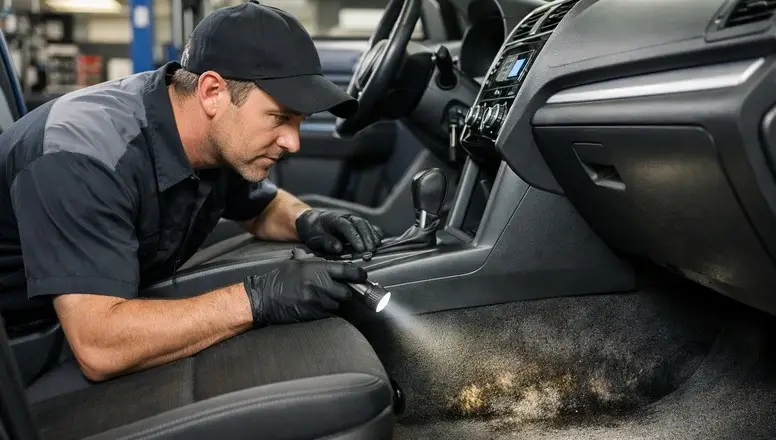
Is Mold in Your Car Dangerous?
Mold in a car can be dangerous in the sense that it may create an unhealthy and unpleasant environment, especially for people who are sensitive to mold, mildew or poor air quality. Some drivers and passengers may notice irritation when spending time in a vehicle with mold, particularly if the mold is active in the carpet, under the seats or within the ventilation system.
Possible concerns can include:
- Musty odours that make the vehicle unpleasant to drive
- Respiratory irritation
- Allergy-like symptoms
- Headaches or discomfort
- Reduced cabin air quality
- Damage to carpet, upholstery and trim
Not everyone will react the same way, but ongoing mold exposure inside a small enclosed space like a car cabin should not be dismissed.
Signs There May Be Mold in Your Vehicle
A musty smell is often the first warning sign. In some cases, the smell may seem worse after rain or when you turn on the heat or air conditioning. That can suggest moisture is still present or that mold may be affecting the HVAC system.
Other signs can include:
- Damp or wet carpet
- Foggy windows that keep coming back
- Moisture in the trunk
- Visible spots or staining on interior fabric
- A smell that returns after cleaning
- Water appearing after rain or a car wash
If you notice any of these problems, the issue may be more than a surface cleaning job.
Why Cleaning Alone May Not Solve It
Many drivers try sprays, odour removers or surface cleaners first. While these can improve the smell temporarily, they do not always solve the real problem. If moisture is still entering the vehicle, mold can return. If mold is hiding under the carpet or in the insulation, the smell may keep coming back even after the visible area has been cleaned.
That is why it is important to identify the source of the moisture. Without correcting the leak or drainage problem, the mold issue often becomes a repeating cycle.
How Mold Can Damage Your Vehicle
Mold is not just a smell issue. Over time, trapped moisture can affect several parts of the interior. Carpet padding, upholstery, insulation and trim can all suffer if they remain damp. In some cases, repeated moisture can also contribute to corrosion or electrical concerns, depending on where the water is getting in.
What starts as a minor leak can turn into a more expensive repair if it is left unresolved.
What To Do If You Suspect Mold in Your Car
If you think mold may be developing in your vehicle, it is a good idea to act early. Removing wet items, drying obvious moisture and checking for visible leaks can help, but a full inspection is often the best next step if the smell or dampness keeps returning.
A proper inspection can help identify:
- Where water is entering the vehicle
- Whether drains are blocked
- Whether moisture is trapped under the carpet
- Whether the smell may be connected to the HVAC system
- What repairs are needed to help prevent the problem from returning
Help for Burnaby Drivers Dealing With Mold and Moisture
In Burnaby, frequent rain and damp conditions can make small leaks much more serious over time. If your vehicle has a mildew smell, wet carpet, recurring window fog or signs of hidden moisture, it may be time to have it inspected.
At Crompton Brothers Automotive, we help drivers identify hidden leaks, moisture intrusion and interior water problems that can lead to mold growth. If your vehicle has ongoing dampness or a musty smell that will not go away, booking an inspection can help you find the cause before the damage gets worse.
Book an Inspection With Crompton Brothers Automotive
If you are asking, “Is mold in your car dangerous?” the safest answer is that it should be taken seriously. Mold inside a vehicle can affect comfort, air quality and interior condition, and it often points to a hidden moisture problem that needs to be fixed.
If your car smells musty or shows signs of water intrusion, contact Crompton Brothers Automotive to book an inspection and find out what is causing the problem.
FAQ
Can mold in a car make you sick?
Mold in a car can cause discomfort for some people, especially those who are sensitive to mold, mildew or poor air quality. It may contribute to allergy-like symptoms, headaches or respiratory irritation in a small enclosed cabin.
What are the signs of mold in a vehicle?
A musty smell is one of the most common signs. You may also notice damp carpet, recurring window fog, moisture in the trunk or visible spots on upholstery and trim.
Is it safe to drive a car with mold inside?
The vehicle may still be drivable, but the mold problem should not be ignored. Ongoing moisture and mold can make the cabin unpleasant and may lead to interior damage or ongoing air quality concerns.
Will mold in my car go away if it dries out?
Drying the interior may help temporarily, but mold often returns if the source of the moisture is not fixed. Hidden dampness under the carpet or in the ventilation system can keep the problem going.
How do I stop mold from coming back in my car?
The most important step is finding and repairing the source of the moisture. Once leaks or drainage issues are addressed, the affected interior should be cleaned and dried properly to help prevent mold from returning.


